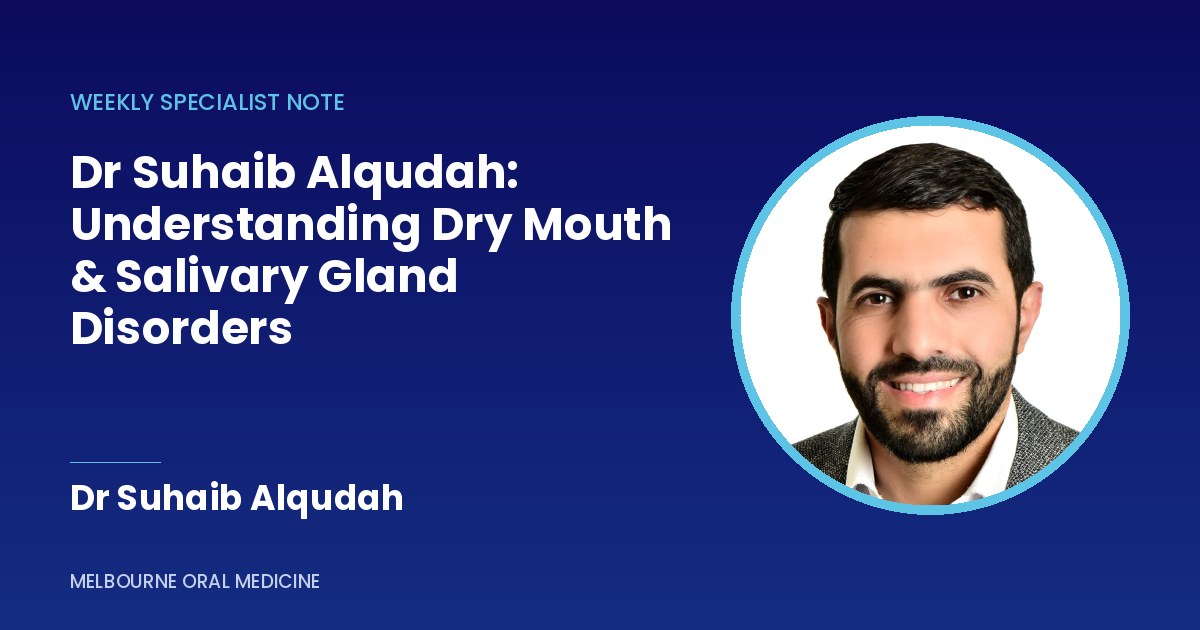
Dr Suhaib Alqudah is a registered Oral Medicine Specialist holding a Doctor of Clinical Dentistry in Oral Medicine and a PhD in Oral Lichen Planus from the University of Melbourne. Since 2017 he has focused entirely on specialist Oral Medicine, caring for patients with complex oral and maxillofacial conditions. He is highly skilled in oral mucosal diseases, temporomandibular disorders, neuralgias, orofacial pain, obstructive sleep apnoea, and dental care for cancer patients and medically complex individuals — now offered Australia-wide through secure teleconsultation.
This week, we focus on dry mouth and salivary gland disorders, a common concern impacting oral comfort and health. Often referred to as xerostomia, dry mouth occurs when salivary glands do not produce enough saliva to keep the mouth moist. This can stem from various causes, including medications, medical conditions like Sjögren's syndrome, radiation therapy to the head and neck, or even dehydration. Persistent dry mouth can lead to discomfort, difficulty speaking and swallowing, and an increased risk of dental decay and oral infections.
Recognising the Signs of Dry Mouth
Beyond the sensation of dryness, other indicators include a sticky feeling in the mouth, increased thirst, a burning or tingling sensation, dry or grooved tongue, and changes in taste. You might also notice increased mouth sores, oral thrush (a fungal infection), or difficulty wearing dentures. Salivary gland disorders can sometimes present with swelling in the face, cheeks, or under the jaw, which may be painful, especially when eating.
Home Care Strategies for Relief
While managing the underlying cause is crucial, several strategies can help alleviate dry mouth symptoms. Sipping water frequently throughout the day, chewing sugar-free gum or sucking on sugar-free candies to stimulate saliva flow, and using over-the-counter saliva substitutes can provide temporary relief. Avoiding caffeine, alcohol, and tobacco, which can worsen dryness, is also recommended. Maintaining meticulous oral hygiene is paramount to prevent complications; diligent brushing and flossing are essential.
When to Seek Specialist Assessment
A specialist oral medicine assessment is highly beneficial when dry mouth symptoms are persistent, significantly impacting your quality of life, or when you suspect an underlying medical condition. We can help identify the specific cause of your dry mouth or salivary gland issue, which is vital for effective management. Our approach involves a thorough review of your medical history, medications, and a clinical examination. This allows for a tailored management plan, which may include prescription medications to stimulate saliva production, specific oral care products, or referrals for further investigations if needed. Early and accurate diagnosis is key to preventing long-term oral health problems associated with reduced salivary function.
Frequently Asked Questions
What is the difference between hyposalivation and xerostomia?
Hyposalivation refers to the reduced production of saliva, while xerostomia is the subjective feeling of having a dry mouth. They often occur together but are not always synonymous; some individuals may feel dry despite normal saliva production, and others may have reduced saliva without feeling particularly dry.
Can dry mouth be a symptom of a serious illness?
Yes, dry mouth can sometimes be an indicator of underlying medical conditions such as Sjögren's syndrome, diabetes, or certain autoimmune diseases. It can also be a side effect of treatments like radiation therapy for head and neck cancers. A specialist assessment can help determine the cause.
How can I book a telehealth consultation?
You can request a telehealth consultation through our website to discuss your concerns about dry mouth or salivary gland disorders.
#Drymouth #Xerostomia #Salivaryglanddisorders #Oralmedicine #Oralhealth #Telehealthconsultation
References
- Xerostomia of Various Etiologies: A Review of the Literature — Advances in clinical and experimental medicine : official organ Wroclaw Medical University · 2016
- Hyposalivation and Xerostomia and Burning Mouth Syndrome: Medical Management — Oral and maxillofacial surgery clinics of North America · 2022
- Pain Management and Rehabilitation for Central Sensitization in Temporomandibular Disorders: A Comprehensive Review — International journal of molecular sciences · 2022
- Temporomandibular Joint Disorders and Orofacial Pain — Dental clinics of North America · 2016
- Burning Mouth Syndrome — Dermatologic clinics · 2020
- Burning Mouth Syndrome — Dental clinics of North America · 2023
- Oral lichen planus - Differential diagnoses, serum autoantibodies, hematinic deficiencies, and management — Journal of the Formosan Medical Association = Taiwan yi zhi · 2018
- Oral Lichen Planus: An Update on Diagnosis and Management — American journal of clinical dermatology · 2024
Get in touch with Melbourne Oral Medicine
Have a question? Our team can help — book a consultation or explore our services. Book a consultation or explore our services.


Add Comment